Cold Email for InsurTech Companies: 2026 Strategy Guide
How to run cold email into insurtech: carrier-facing vs broker-facing buyers, signal-based list building, four templates, and vertical compliance rules.
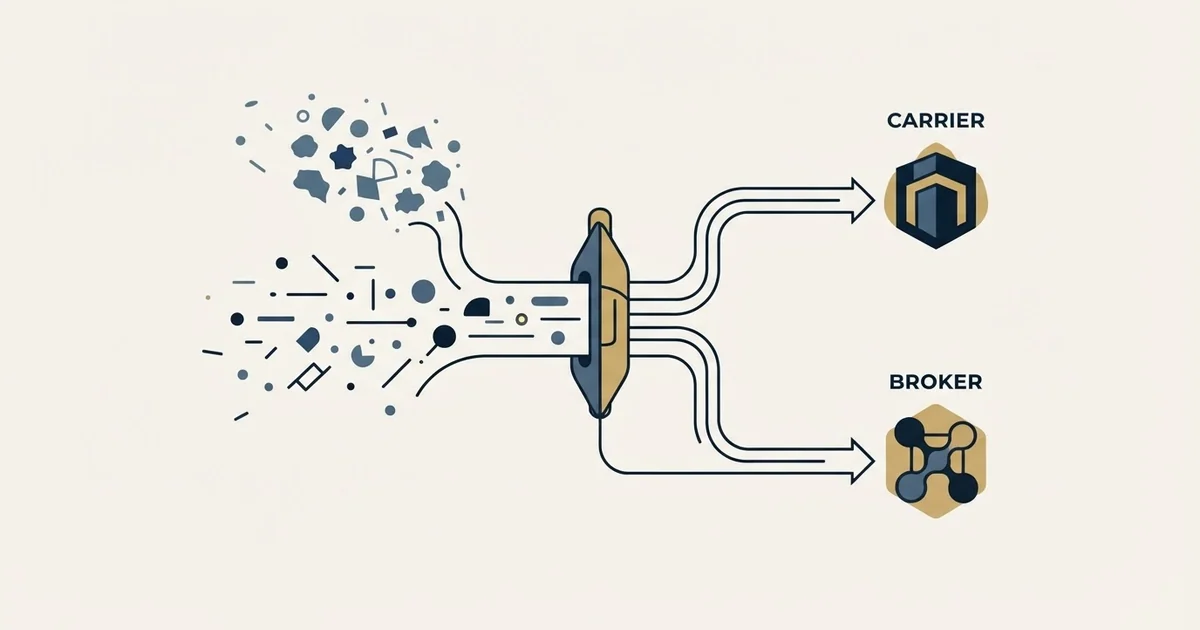
Cold email works well in insurtech because funding rounds, state licensing filings and carrier partnerships are public trigger events. Segment targets by whether they sell to carriers (long, security-review-driven cycles) or to brokers and agencies (fast, cost-to-serve driven), then write separate copy, and never request policyholder data by email.
Key takeaways
- Global insurtech funding reached $5.08 billion in 2025, the first annual increase since 2021, with roughly two thirds going to AI-focused companies (Gallagher Re).
- Segment every insurtech list by whether the company sells to carriers or to brokers and agencies, because that determines sales cycle length, contract size and the pain worth pitching.
- Carrier-facing insurtechs run 9 to 18 month cycles and buy things that unblock enterprise security reviews; broker-facing insurtechs run 30 to 120 day cycles and buy things that cut cost to serve.
- Email 60 to 120 days after a funding announcement rather than announcement week, when budgets are firm and the inbox is quieter.
- Over twenty states have adopted versions of the NAIC Insurance Data Security Model Law, so never ask a prospect to send policyholder data, claims records or PII in an email thread.
- Insurtech has a small addressable market (low thousands of companies with 20+ employees), so a deeply researched list of 800 beats a generic list of 8,000 you can never rebuild.
Reviewed and updated August 28, 2026
Cold Email for InsurTech Companies: 2026 Strategy Guide
Global insurtech funding reached $5.08 billion in 2025, the first annual increase since 2021, and roughly two thirds of it went to AI-focused companies. Source: Gallagher Re Global InsurTech Report Q4 2025. That capital turns into headcount, infrastructure spend, compliance tooling, and vendor contracts within about two quarters of the round closing, which makes funded insurtechs one of the more predictable buying populations in B2B.
The catch is that "insurtech" describes companies with almost nothing in common operationally. A digital MGA writing commercial auto in eleven states, a claims automation vendor selling into Tier 1 carriers, an embedded insurance API layer, and a full-stack licensed carrier all wear the label. The single most useful way to segment them is whether the company sells to carriers or to brokers and agencies, because that choice determines their sales cycle, their margin structure, and the operational pain they will pay to remove.
Cold Email for MarTech Companies shows how differentiation-led messaging and trigger-based targeting play out in another software vertical where recipients read email headers closely.
Why Cold Email Works Better Here Than in Most Verticals
Insurtech is a small, densely networked market. The same few thousand people rotate between carriers, brokers, MGAs, and startups, and they attend the same handful of events (InsureTech Connect, RIMS, NAMIC, Insurtech Insights). That density cuts both ways. Reputation travels fast, so sloppy outreach costs you more than it would in a broader market, and a single well-placed reply can produce three referrals inside a quarter.
Insurtech companies are also young enough to lack entrenched procurement bureaucracy but funded enough to move on a real budget. A Series A insurtech with 40 people has no vendor management office standing between you and the VP of Engineering. A Tier 1 carrier does.
Timing is unusually legible here too. Funding rounds, state licensing expansions, carrier partnerships, and capacity deals are all public. Few B2B verticals hand you this many dated trigger events.
Dated trigger events shape outreach timing elsewhere too, and the same logic drives semiconductor buying cycle strategy, where technology transitions and qualification windows dictate when an email lands.
The Two Buyer Worlds: Carrier-Facing vs Broker-Facing
Before you write a single line of copy, sort your target list into companies whose revenue comes from carriers and companies whose revenue comes from brokers, agencies, and MGAs. These two groups have different problems and respond to different framing.
| Carrier-facing insurtech | Broker and agency-facing insurtech | |
|---|---|---|
| Their sales cycle | 9 to 18 months, procurement-heavy | 30 to 120 days, often self-serve or light touch |
| Their contract size | Six to seven figures, few logos | Four to five figures, many logos |
| What keeps them up at night | Security reviews, SOC 2 findings, data residency, proving ROI to actuaries | Churn, activation, support load, agency management system integrations |
| Who you email | CTO, VP Engineering, Head of Security, Head of Data, Chief Actuary | COO, VP Customer Success, VP Product, Head of RevOps |
| Buying trigger | A stalled enterprise deal, a failed security questionnaire, a new carrier logo | A support backlog, a churn spike, a new AMS or rater integration |
| Copy that lands | Risk reduction, audit evidence, model explainability, uptime | Time saved per policy, seat expansion, retention |
Carrier-facing insurtechs buy things that unblock enterprise deals. If your product shortens a security review, produces audit evidence, handles SOC 2 or NAIC-aligned controls, or makes a model's decisions explainable to a regulator, lead with the stalled deal. These companies routinely have seven figures of ARR sitting behind a carrier's third-party risk management process.
Broker-facing insurtechs buy things that reduce cost to serve. Their unit economics depend on supporting hundreds or thousands of small agencies without hiring proportionally, so onboarding, support deflection, integration engineering, and data hygiene are the recurring line items. Lead with cost per account served.
Full-stack licensed carriers sit in between: carrier-like on compliance, startup-like on pace. Use carrier framing at broker pace for those.
If you are the insurtech deciding whether to hand this outreach to an outside team, SDR outsourcing for insurtech companies covers what that team must be able to say to each of these buyers.
How the Buying Cycle Actually Moves
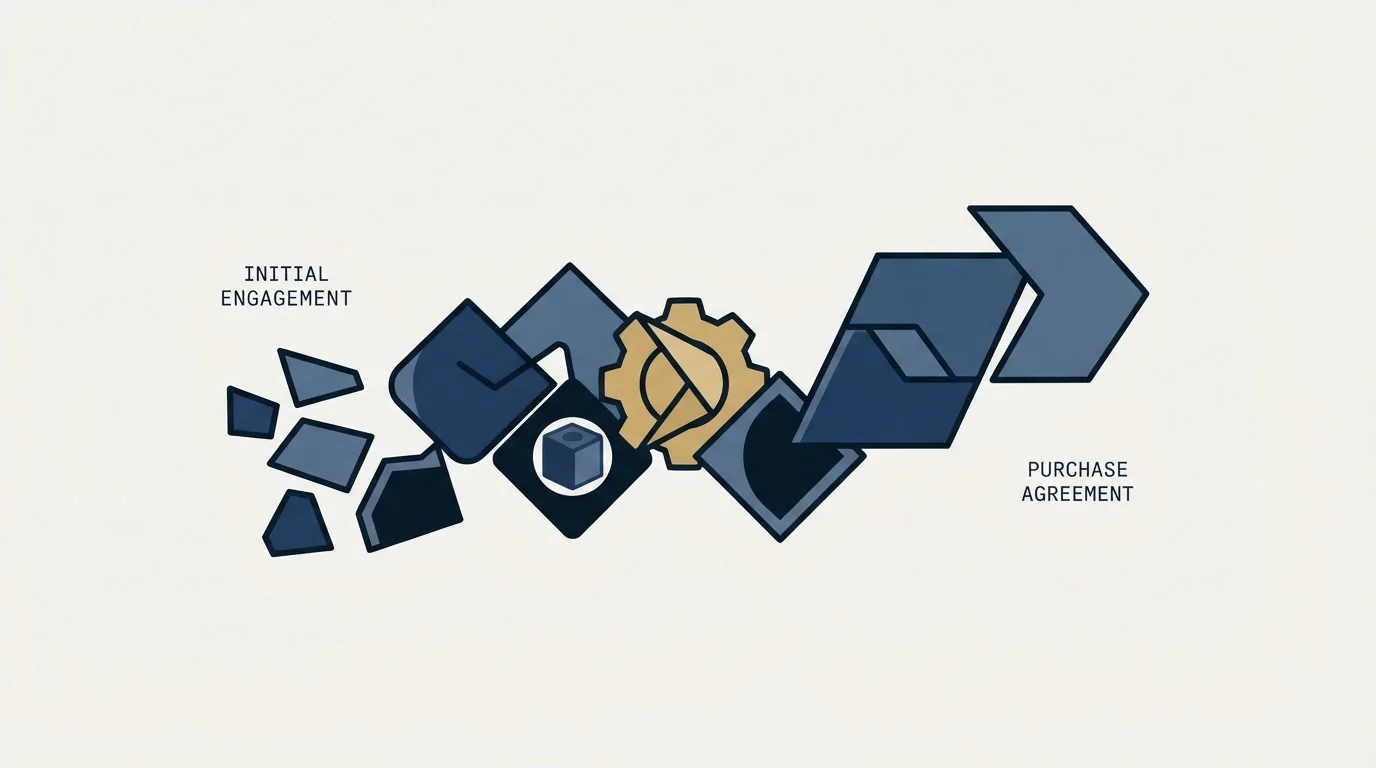
Insurtech buying runs on three clocks, and knowing which one your prospect is on determines when your email is welcome.
The funding clock. Spending accelerates roughly 60 to 120 days after a round is announced, once hiring plans firm up. The announcement week is the most crowded moment in that company's inbox. Waiting six to ten weeks puts you in a quieter window with the same budget available.
The carrier renewal clock. Large commercial and reinsurance treaties cluster around January 1, with additional concentration at April 1 and July 1. Anyone whose customers are carriers goes quiet in the four to six weeks before those dates, and health and benefits insurtechs go quiet through open enrollment (roughly October through mid-December in the US).
The audit clock. SOC 2 Type II observation windows, penetration tests, and state examination cycles create hard deadlines. A company that just failed a questionnaire item buys in weeks.
- Yes: The funding clock. Spending accelerates roughly 60 to 120 days after a round is announced, once hiring plans firm up.
- Yes: The carrier renewal clock. Large commercial and reinsurance treaties cluster around January 1, with additional concentration at April 1 and July 1.
- Yes: The audit clock. SOC 2 Type II observation windows, penetration tests, and state examination cycles create hard deadlines.
Deals follow a consistent shape: a technical champion runs a pilot, security review runs in parallel, then legal and finance close it. Your first email targets the champion, not the signer. Asking a CTO for a 30-minute demo in email one fails. Asking whether a specific problem is on their roadmap this half works.
Building the List
Firmographic filters alone produce a weak insurtech list. Start with the base (companies tagged insurance technology or insurance software in Crunchbase, Apollo, or LinkedIn Sales Navigator, filtered to 20 to 500 employees), then layer signals on top:
- Funding events from the last two to six months. Prioritize Series A through C, where the buying committee is small and the budget is new.
- State licensing and appointment activity. NAIC and state DOI filings show when an MGA or carrier expands into new states, which reliably triggers compliance, data, and operations spend.
- Job postings. Openings for actuarial, claims operations, compliance, data engineering, or security roles tell you where the pain is before any vendor gets called. A posting for a first Head of Security is a direct signal for anyone selling compliance tooling.
- Carrier partnership announcements. A new capacity or fronting deal means integration work and a new security review.
- Conference speaker and exhibitor lists. Published publicly, and they double as personalization fuel.
- Technology footprint. Guidewire, Duck Creek, Applied Epic, and AMS360 each imply integration realities you can name in the first line.
Verify every address before sending. Insurtech companies churn domains during rebrands and acquisitions more than average, and a stale list burns sending domains fast.
Four Email Approaches That Fit This Vertical

1. The Stalled Enterprise Deal (carrier-facing insurtech)
Subject: {{company}}'s carrier security reviews

Hi {{first_name}},

Saw {{company}} announced the {{carrier_partner}} partnership in {{month}}.
Congrats.

Most teams selling into carriers at your stage hit the same wall about
now: the third-party risk questionnaire from the second and third carrier
looks nothing like the first, and engineering ends up rewriting evidence
instead of shipping.

We handle {{specific_capability}} for {{reference_company_1}} and
{{reference_company_2}}, both selling into Tier 1 carriers. Cut their
questionnaire turnaround from weeks to days.

Is carrier security review on your roadmap for this half, or already
solved?

{{sender_name}}
{{sender_title}}
Why this works: It names a public event, then describes a specific, recognizable operational failure rather than a generic benefit. The closing question offers an easy "already solved" exit, which lifts reply rate and gives you clean disqualification.
2. The Cost-to-Serve Angle (broker and agency-facing insurtech)
Subject: onboarding load per agency at {{company}}

{{first_name}},

Quick one. {{company}} is onboarding agencies onto {{product_category}},
and from your {{job_posting_role}} posting it looks like support volume
is scaling with logo count.

The pattern we see: every new agency brings its own {{ams_name}} data
mess, and CS spends the first three weeks cleaning it instead of driving
activation.

{{reference_company_1}} was in the same spot. They now onboard roughly
{{number}} agencies per CSM instead of {{smaller_number}}.

Worth 10 minutes to see if the mechanics transfer, or is this already
handled?

{{sender_name}}
Why this works: The job posting reference proves the research is real without flattery, and the outcome is quantified in the unit this buyer manages (accounts per CSM), which is what a COO at a broker-facing insurtech reports on.
3. The Post-Funding Infrastructure Email
Subject: after the {{round_name}}

Hi {{first_name}},

{{company}} closed the {{round_name}} in {{month}}. The engineering
hiring plan usually lands about now, and so does the realization that
{{infrastructure_problem}} does not survive 3x the volume.

We work with insurtechs at exactly this stage. {{reference_company_1}}
moved off {{legacy_approach}} before their volume tripled and avoided
the rebuild.

I put together a short teardown of how three insurtechs handled
{{infrastructure_problem}} post-raise. Want me to send it over? No call
required.

{{sender_name}}
Why this works: The ask is a document rather than a meeting, which suits technical buyers who resent calendar requests from strangers. Sending six to ten weeks after the round avoids the announcement-week pile-on. The teardown must actually exist.
4. The Regulatory Deadline Email
Subject: {{state}} data security requirements

{{first_name}},

{{company}} filed for {{state}} last quarter, which brings you under
that state's insurance data security requirements.

Most teams discover the incident-response and third-party oversight
documentation obligations during the first market conduct exam rather
than before it.

We built {{specific_capability}} for insurtechs in exactly this
position, including {{reference_company_1}}.

If your compliance lead already owns this, say the word and I will stop.
If not, I can send the two-page control checklist we use.

{{sender_name}}
Why this works: It anchors on a dated, verifiable public filing and names a consequence with a real deadline attached. The explicit permission to opt out reads as respect rather than pressure, and a "no thanks" reply protects your domain far better than a spam complaint.
Compliance and Deliverability in an Insurance-Adjacent Market
US outreach here is governed by CAN-SPAM: accurate headers and subject lines, a valid physical postal address, and a working opt-out honored within 10 business days. Opt-in consent is not required before the first message. Source: FTC CAN-SPAM Act Compliance Guide.
Three vertical-specific constraints matter beyond that baseline:
Your prospects are unusually security-literate. Insurtech staff live inside third-party risk processes and are trained to spot spoofed domains, mismatched sender identities, and lookalike URLs. A cold email from a domain that is a near-miss of your real one gets reported, not ignored. Keep sending domains obviously related to your brand and never use link shorteners.
UK and EU insurtechs sit under stricter consent rules. GDPR and the ePrivacy rules give corporate subscribers less protection than individuals, but personal-format addresses (firstname.lastname@) are still personal data, and legitimate interest requires a documented balancing test. Segment by geography rather than applying one policy everywhere.
Insurance data security regulation shapes what you can ask for. Over twenty states have adopted versions of the NAIC Insurance Data Security Model Law, and New York's DFS Part 500 cybersecurity regulation applies to licensed entities operating there. Sources: NAIC Data Privacy and Insurance, NYDFS Cybersecurity Regulation. Practically, never ask a prospect to send sample policyholder data, claims records, or PII in an email thread. Offer synthetic or anonymized pilot data instead and say so explicitly. That single line removes a real objection.
On mechanics, the bar set by the major inbox providers applies here as everywhere: authenticate with SPF, DKIM, and DMARC, keep user-reported spam rates below 0.3%, and support one-click unsubscribe for bulk sending. Source: Google Email Sender Guidelines. Warm new domains for at least three weeks before volume sending and cap per-mailbox sends.
Realistic Expectations

Insurtech is a narrow total addressable market. However you define it, the global population of insurtech companies with 20 or more employees numbers in the low thousands, which constrains volume and changes the strategy.
Run a smaller, deeper program. A list of 800 well-researched contacts with genuine signal-based personalization will outperform 8,000 generic ones, and you cannot rebuild the 8,000 list next quarter because you have already exhausted the market. Burning the vertical with volume is a permanent cost.
Budget for long carrier-adjacent cycles. If your buyer is a carrier-facing insurtech and your product touches their security posture, the deal you open in Q1 closes in Q3. Resist declaring the channel dead at week six.
Ask for referrals early and explicitly. People rotate between companies constantly, so one happy customer who moves to a new insurtech tends to bring you a second deal.
Your InsurTech Cold Email Checklist
Targeting
- List split into carrier-facing and broker-facing segments with separate copy for each
- Funding events from the last two to six months layered in as a signal
- Job postings checked for actuarial, claims ops, compliance, data, and security roles
- State licensing and carrier partnership announcements captured with dates
- Technology footprint (Guidewire, Duck Creek, Applied Epic, AMS360) identified where relevant
Copy
- First line references a dated, verifiable public event
- Problem described in the buyer's operational vocabulary, not your product's
- Outcome quantified in a unit this buyer reports on
- Ask is a document, a question, or a 10-minute call, never a 30-minute demo
- Explicit opt-out language included, total length under 150 words
Compliance and infrastructure
- Physical address and working unsubscribe in every send
- SPF, DKIM, and DMARC passing, domains warmed three weeks
- EU and UK contacts segmented under a documented legitimate interest assessment
- No requests for policyholder data, claims records, or PII in email
- Synthetic or anonymized pilot data offered up front
Timing
- Send calendar avoids renewal crunches and open enrollment blackouts
- Any later campaign leads with new information rather than checking in on the last one
Where to Start

Pick 100 insurtech companies that closed a round two to six months ago, split them by whether they sell to carriers or to brokers, and write two versions of one email. Send 50 of each over two weeks, read the replies rather than the open rates, and rewrite based on what people pushed back on. That loop teaches you more about this vertical in a month than any playbook, including this one.
If you would rather have this built and run for you, RevenueFlow does done-for-you cold email for B2B companies, including list building, infrastructure, copy, and reply handling. Book a strategy call and we will map the insurtech segment you are targeting and the campaign to reach it.
Related Reading
- Cold Email for Insurance: Reaching Carriers, Brokers, and Insurtech Companies
- Cold Email for Publishing Companies: 2026 Strategy Guide
- Cold Email for Property Management Companies: 2026 Strategy Guide
If you would rather have this run for you, RevenueFlow books qualified meetings on a pay-per-meeting basis and publishes client results.
Frequently asked questions.
Frequently asked questions- Is cold email to insurtech companies legal in the US?
- Yes. B2B cold email in the US is governed by CAN-SPAM, which requires accurate headers and subject lines, a valid physical postal address, and a working opt-out honored within 10 business days. Opt-in consent is not required before the first message. UK and EU contacts are stricter: personal-format addresses are personal data under GDPR and legitimate interest requires a documented balancing test.
- Who actually has budget at an insurtech company?
- It depends on their customer. At carrier-facing insurtechs, budget sits with the CTO, VP Engineering, Head of Security, Head of Data or Chief Actuary, because purchases usually unblock enterprise security reviews. At broker and agency-facing insurtechs, budget sits with the COO, VP Customer Success, VP Product or Head of RevOps, because purchases usually reduce cost to serve.
- When is the worst time to email insurtech prospects?
- Avoid the four to six weeks before January 1, April 1 and July 1, when large commercial and reinsurance treaty renewals dominate carrier attention. Skip health and benefits insurtechs from roughly October through mid-December during open enrollment. Also avoid the week a funding round is announced, since that inbox is at its most crowded.
- What list-building signals work best for insurtech outreach?
- Layer signals on top of firmographics: funding events from the last two to six months, NAIC and state DOI licensing filings showing new state expansion, job postings for actuarial, claims ops, compliance, data or security roles, carrier partnership announcements, conference speaker and exhibitor lists, and technology footprint such as Guidewire, Duck Creek, Applied Epic or AMS360.
- Should I offer a pilot with the prospect's real data?
- No. Insurance data security regulation, including state adoptions of the NAIC Insurance Data Security Model Law and NYDFS Part 500, makes prospects cautious about moving policyholder or claims data to a new vendor. Offer synthetic or anonymized pilot data and say so explicitly in the email. It removes a real objection before it gets raised.
About the author.

Fernando Cao is CEO at RevenueFlow, which builds and operates outbound revenue engines for B2B companies. Previously at Accenture Strategy. Studied at University of Bath.
Fernando Cao · CEO
Connect on LinkedIn →Explore more.
Ready to scale your outreach?
We build GTM engines that book real meetings. See the receipts.
Related articles.
Cold Email for Architecture Firms: 2026 Strategy Guide
Architecture firms buy on project phases rather than fiscal quarters. How to build a list, time the spec window, and write cold emails principals answer.
Cold Email for Trucking and Fleet Companies: 2026 Guide
How to reach carriers, fleet operators, and safety buyers with cold email: FMCSA-driven list building, trigger timing, four templates, and compliance.
Cold Email for Cannabis Companies: 2026 Strategy Guide
The April 2026 rescheduling order split cannabis buyers into two tax realities. Here is how to segment, list-build, and write cold email for each.
Cold Email for Private Equity Firms: 2026 Strategy Guide
How to run cold email into private equity: mapping fund-level and portfolio-level buyers, list sources, four templates, and PE-specific deliverability rules.
Cold Email for Wealth Management Firms: 2026 Strategy Guide
RIAs are 16,500+ mostly small firms with public Form ADV data, small buying committees, and a compliance gate. How to run cold email into wealth management.
Cold Email for Interior Design Firms: 2026 Strategy Guide
Commercial interior designers specify products they never buy. Here is how to build cold email that wins the specification, plus four templates.